
N-ary Tree Level Order Traversal - Video Solutions
N array Tree Level Order Traversal | Leetcode 429 | Live coding session 🌳🌳🌳
N-ary Tree Level Order Traversal - Video Solution
Watch 10 video solutions for N-ary Tree Level Order Traversal, a medium level problem involving Tree, Breadth-First Search. This walkthrough by Coding Decoded has 3,021 views views. Want to try solving it yourself? Practice on FleetCode or read the detailed text solution.
Problem Statement
Given an n-ary tree, return the level order traversal of its nodes' values.
Nary-Tree input serialization is represented in their level order traversal, each group of children is separated by the null value (See examples).
Example 1:
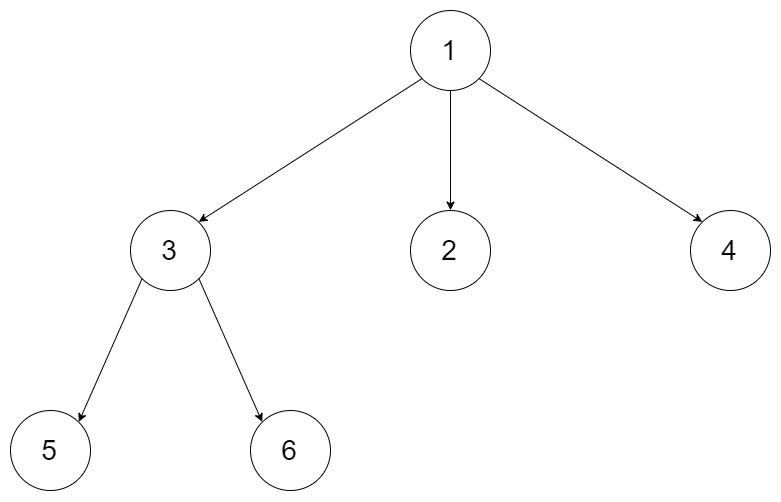
Input: root = [1,null,3,2,4,null,5,6]
Output: [[1],[3,2,4],[5,6]]
Example 2:
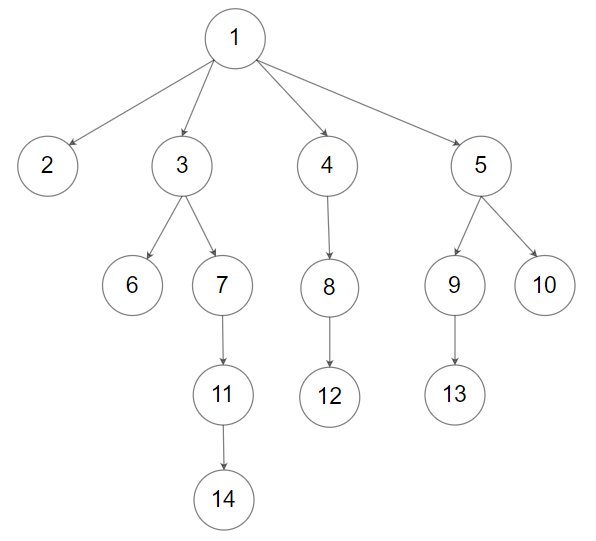
Input: root = [1,null,2,3,4,5,null,null,6,7,null,8,null,9,10,null,null,11,null,12,null,13,null,null,14]
Output: [[1],[2,3,4,5],[6,7,8,9,10],[11,12,13],[14]]
Constraints:
- The height of the n-ary tree is less than or equal to
1000 - The total number of nodes is between
[0, 104]
Approach Overview
Problem Overview: Given the root of an N-ary tree, return the level order traversal of its nodes' values. Nodes at the same depth should appear in the same list, processed from left to right.
Approach 1: Iterative Level Order Traversal using Queue (O(n) time, O(w) space)
This approach uses Breadth-First Search (BFS) with a queue to process the tree level by level. Start by pushing the root into the queue. For each level, record the current queue size, iterate that many nodes, and enqueue all children of each node. This guarantees that nodes are grouped by depth before moving to the next level. Time complexity is O(n) because every node is visited exactly once, and space complexity is O(w), where w is the maximum width of the tree due to the queue storing nodes of the current level.
This pattern appears frequently in Breadth-First Search problems and works naturally for level-based traversal. If you already think in BFS layers, this solution is straightforward and easy to implement.
Approach 2: Recursive Level Order Traversal (O(n) time, O(h) space)
The recursive approach uses Depth-First Search (DFS) while tracking the current depth. Maintain a result list where index i stores values for level i. During recursion, if the current depth does not yet exist in the result, create a new list. Append the node's value and recursively process each child with depth + 1. Each node is still visited once, giving O(n) time complexity. Space complexity becomes O(h) for the recursion stack, where h is the tree height.
This approach blends tree traversal with recursion. It avoids an explicit queue and keeps the implementation compact, though it may be less intuitive if you naturally think about levels iteratively.
Recommended for interviews: The queue-based BFS solution is the expected answer in most interviews because level order traversal directly maps to BFS mechanics. The recursive variant shows deeper understanding of traversal patterns, but interviewers typically prefer the iterative BFS since it clearly expresses level boundaries.
Complexity Analysis
| Approach | Time | Space | When to Use |
|---|---|---|---|
| Iterative Level Order Traversal using Queue | O(n) | O(w) | Standard level order traversal. Best choice for interviews and large trees. |
| Recursive Level Order Traversal | O(n) | O(h) | When you prefer DFS with depth tracking or want a concise recursive implementation. |