
Maximum Depth of Binary Tree - Video Solutions
Maximum Depth of Binary Tree - 3 Solutions - Leetcode 104 - Python
Maximum Depth of Binary Tree - Video Solution
Watch 10 video solutions for Maximum Depth of Binary Tree, a easy level problem involving Tree, Depth-First Search, Breadth-First Search. This walkthrough by NeetCode has 378,388 views views. Want to try solving it yourself? Practice on FleetCode or read the detailed text solution.
Problem Statement
Given the root of a binary tree, return its maximum depth.
A binary tree's maximum depth is the number of nodes along the longest path from the root node down to the farthest leaf node.
Example 1:
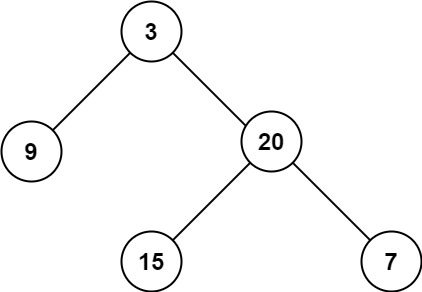
Input: root = [3,9,20,null,null,15,7]
Output: 3
Example 2:
Input: root = [1,null,2]
Output: 2
Constraints:
- The number of nodes in the tree is in the range
[0, 104]. -100 <= Node.val <= 100
Approach Overview
Problem Overview: Given the root of a binary tree, return its maximum depth. The depth is the number of nodes along the longest path from the root down to a leaf node. You need to traverse the tree and determine how far the deepest branch extends.
Approach 1: Recursive Depth-First Search (DFS) (Time: O(n), Space: O(h))
This approach uses recursion to explore the tree using Depth-First Search. For each node, recursively compute the depth of its left and right subtrees. The maximum depth at that node is 1 + max(leftDepth, rightDepth). The recursion naturally mirrors the structure of the binary tree, making the implementation very concise. Time complexity is O(n) because every node is visited once. Space complexity is O(h), where h is the tree height, due to the recursion stack. In the worst case of a skewed tree, this becomes O(n); for balanced trees it is O(log n). This is the most common solution used in interviews.
Approach 2: Breadth-First Search (BFS) using Queue (Time: O(n), Space: O(w))
This method traverses the tree level by level using Breadth-First Search. Start by pushing the root node into a queue. For each level, process all nodes currently in the queue, then push their left and right children. After finishing a level, increment the depth counter. Continue until the queue becomes empty. Since each node is enqueued and dequeued exactly once, the time complexity remains O(n). Space complexity is O(w), where w is the maximum width of the tree (the largest number of nodes at any level). This approach is useful when you want explicit control over level traversal.
Recommended for interviews: Recursive DFS is typically the expected solution because it directly models the recursive structure of a tree and results in very clean code. BFS using a queue demonstrates understanding of level-order traversal and iterative tree processing. Showing both approaches signals strong familiarity with tree traversal patterns.
Complexity Analysis
| Approach | Time | Space | When to Use |
|---|---|---|---|
| Recursive Depth-First Search (DFS) | O(n) | O(h) | Best general solution. Clean recursive logic that mirrors tree structure. Preferred in interviews. |
| Breadth-First Search (BFS) with Queue | O(n) | O(w) | Useful when performing level-order traversal or when recursion depth could be large. |