IndiaAI Fellowship 2026-27: Up to ₹2 Lakh for Students With an AI Project, Apply by 30 November
The government's IndiaAI Fellowship pays final-year UG students up to ₹1 lakh and PG students up to ₹2 lakh for an AI project, in any stream. Who can apply, the documents you need, and why you should apply early.

On this page 10 sections
If you are in the final year of your degree or early in a master's, and your project uses AI, the government will fund it. The IndiaAI Fellowship gives final-year UG and dual-degree students up to ₹1 lakh and PG students up to ₹2 lakh, paid in ₹50,000 instalments while you complete your course. Engineering students are not the only ones who can apply. Students of science, medicine, law, commerce, business and the liberal arts are eligible too, as long as the project is in AI.
The fellowship is run by IndiaAI, the division of Digital India Corporation that runs the IndiaAI Mission for the Ministry of Electronics and IT (MeitY). It belongs to the mission's FutureSkills programme. PhD scholars get a separate, much larger research fellowship of ₹70,000 to ₹80,000 a month, covered further down this page.
Status on 6 November 2026: applications for the 2026-27 academic year opened in mid-October and close on 30 November 2026. You can only apply on fellowship.indiaai.gov.in. IndiaAI evaluates and approves applications in the order they arrive, and a college normally gets up to 10 fellows a year. An application sent in early November has a better chance than one sent on the last day.
IndiaAI Fellowship at a glance
| Detail | 2026-27 |
|---|---|
| Run by | IndiaAI (Digital India Corporation, MeitY), IndiaAI Mission's FutureSkills programme |
| Who can apply | Final-year UG and integrated dual degree students, PG students in semester 1, 2 or 3, first-year PhD scholars |
| UG and dual degree | Up to ₹1 lakh (two instalments of ₹50,000) |
| PG | Up to ₹2 lakh, depending on the semester you join in |
| PhD | ₹70,000 to ₹80,000 a month for up to five years |
| Conference bonus | Up to ₹1 lakh once, if your paper is accepted at a top international AI conference |
| Minimum marks | CGPA 7.0 or 70% (PhD: 8.0 after UG or 7.5 after PG) |
| Streams | Any stream; the project must be in AI |
| Seats | Normally up to 10 UG/dual degree and 10 PG fellows per college a year |
| Last date | 30 November 2026 |
| Apply at | fellowship.indiaai.gov.in |
How much money you get
The amount depends on your course and the semester you are selected in. Every instalment is ₹50,000.
| Course | When you join the fellowship | Total |
|---|---|---|
| 3-year UG (B.Sc, BCA, B.Com, BA and others) | Start of 5th semester | Up to ₹1 lakh in 2 instalments |
| 4-year UG (B.Tech, BE, 4-year honours degrees) | Start of 7th semester | Up to ₹1 lakh in 2 instalments |
| 5-year integrated dual degree | Start of 9th semester | Up to ₹1 lakh in 2 instalments |
| PG, joining in semester 1 | 1st semester | Up to ₹2 lakh in 4 instalments |
| PG, joining in semester 2 | 2nd semester | Up to ₹1.5 lakh in 3 instalments |
| PG, joining in semester 3 | 3rd semester | Up to ₹1 lakh in 2 instalments |
The first instalment comes once IndiaAI accepts that you meet the eligibility rules. For each one after that, you upload your last semester's grade sheet with a CGPA of 7.0 or 70% or more, plus a progress report on your project signed by your guide. If your grades drop below that, the next instalment is held back.
One thing to know: the FAQ box on the portal's home page still quotes 80% for UG and 75% for PG for the later instalments. The 2026-27 guidelines PDF and the separate FAQ PDF published with them both say 7.0 or 70%. Go by the guidelines, but don't let your grades slide.
For UG and PG students, the fellowship comes on top of any scholarship you already get. The guidelines say it "will supplement existing fellowships/scholarships", so a merit or state scholarship does not rule you out. PhD scholars are treated differently (see below).
Extra ₹1 lakh for a conference paper
If a paper or project from your fellowship work is accepted at an international conference run by a publisher with an h5-index above 100, IndiaAI pays up to ₹1 lakh once towards registration, travel or stay. The guidelines give an indicative list of 22 conferences, including NeurIPS, ICML, ICLR, CVPR, ICCV, ECCV, ACL, EMNLP, NAACL, AAAI, IJCAI, KDD, SIGIR, WWW, CHI, ICRA, SIGGRAPH and AISTATS.
Who can apply
UG and integrated dual degree students
- You study full time in the final year of a UG, Bachelor's (Honours with Research) or integrated dual degree course, in any stream.
- You have an overall CGPA of 7.0, or 70% marks, up to your last completed semester.
- You completed at least three Data/AI courses before your final year (more on this below).
- Your project is in artificial intelligence. The application area can be anything: farming, health, law, finance, education.
- You are an Indian national.
For the 2026-27 cycle, that means a B.Tech or BE student of the 2023-27 batch (now in the 7th semester), or a B.Sc, BCA, B.Com or BA student of the 2024-27 batch (now in the 5th semester). Dual degree students of the 2022-27 batch qualify in their 9th semester.
PG students
- You study full time in a master's or PG diploma course and are in the 1st, 2nd or 3rd semester.
- Applying in the 1st semester: overall CGPA of 7.0 or 70% in your UG degree.
- Applying in the 2nd or 3rd semester: 7.0 or 70% in UG, and 7.0 or 70% in your PG semesters so far.
- You completed at least three Data/AI courses before applying.
- Your project is in AI, and you are an Indian national.
If you joined an M.Tech, MCA, M.Sc or MBA in 2026, you are in your first semester and can get the full ₹2 lakh. If you joined in 2025, you are in your third semester and can get up to ₹1 lakh. Students of courses that start in January fall in between.
The PG guidelines say applicants should be studying in AI-related disciplines, while the eligibility table on the portal opens the scheme to every stream. If your master's is not in an AI field, make sure your project and your three courses clearly are.
The three AI courses rule
This is the rule that catches most students. You need at least three full-time courses related to data or AI, taken as core or elective subjects. The guidelines give examples: Fundamentals of Artificial Intelligence, Machine Learning, Neural Networks, Computer Vision, Natural Language Processing, Data Science, Data Analytics, Data Engineering and Data Management Systems.
If your syllabus had no such subjects, courses from NPTEL and similar platforms count. You then have to upload their completion certificates with the application. A commerce or law student who has done three NPTEL courses on AI or data science can therefore apply.
Which colleges qualify
The UG and PG guidelines don't publish a list of colleges. You type your college's name in the form, and your project guide then has to approve the application using an official college email address (Gmail and Yahoo addresses are not accepted). The FutureSkills description on the portal mentions students at top NIRF-ranked colleges, so ask your HoD or your college's IndiaAI nodal officer whether your college is taking part before you start on the paperwork. Each college can forward up to 10 UG/dual degree and 10 PG applications in a cycle.
Documents you need
- Clearly scanned marksheets of every semester (PG students: UG and PG marksheets).
- Completion certificates for your three AI courses, if they were not part of your syllabus.
- An endorsement letter on your college's letterhead, signed and stamped by your project guide, HoD or head of the institution, in the format in Annexure 1 of the guidelines. The upload form asks for one from your project guide and one from the head of the institute.
- The front page of your bank passbook or a cancelled cheque. The account must be in your name.
- A passport-size photo.
PDFs must be between 20 KB and 2 MB. The photo must be a JPG or PNG between 20 KB and 500 KB.
The endorsement letter lists your enrolment number, semester, course, department, CGPA, whether you study full time, your project title, your guide's name and designation, and the three AI courses you completed. It also names one or two alternative guides who will take over if your guide leaves. Every figure in it has to match what you type in the online form, so fill in the online form as a draft first and get the letter made from it. Getting the letter signed and stamped usually takes the longest, so ask for it this week.
How to apply
Before you start, you need an APAAR ID and a DigiLocker account. The portal logs you in through DigiLocker and reads your APAAR ID from it. If you don't have an APAAR ID yet, sort that out with your college office first.
- Open fellowship.indiaai.gov.in and click Student Login or Apply Now.
- Sign in with DigiLocker using your PIN or an OTP. Allow access and tick your APAAR ID on the consent screen. If you deny access, you are logged out.
- Pick your programme: Undergraduate, Postgraduate, Integrated Dual Degree or PhD.
- Fill in your details. Your name, date of birth and phone number come from DigiLocker. Add your branch, programme, email, category, college name, PIN code and address.
- Enter your roll number, your latest CGPA or percentage and your three AI courses.
- Add your bank name, IFSC and account number, and upload the passbook page or cancelled cheque.
- Describe your project: a title, a brief of up to 500 words covering the objective, method and expected impact, and a domain from the list (agriculture, cybersecurity, defence and others). Then add your guide's name, designation, department, official email and phone number, and a co-guide if you have one.
- Tick the declarations and upload your documents.
- Click Preview, check every field, then Submit. Note your Application ID and download the PDF copy.
Your status then shows "Pending at Guide". Your guide checks the application and either approves it or sends it back to you if a document is missing or wrong. Once it is submitted you cannot edit it yourself, and a send-back does not extend the deadline. Documents sent by email are not accepted.
Writing a project brief that works
The 500-word brief is the only place you explain your project, so make it specific. A good brief answers five questions:
- What problem are you solving, and for whom?
- What data will you use: a public dataset or data you will collect?
- What will you build or train, and with which methods?
- How will you measure whether it works?
- What will you have at the end of the year?
"Detecting leaf disease in Karnataka's tomato crop from phone photos, using a public dataset plus 2,000 images we collect, measured by accuracy on held-out farms" says much more than "AI for agriculture". Agree on the brief with your guide before you submit, since they sign every progress report that releases your next instalment.
After you are selected
- You get the first ₹50,000 after the eligibility check, and each later instalment after you upload your grade sheet and a progress report signed by your guide.
- You can publish papers from the project. IndiaAI recommends that you credit the scheme and upload papers or summaries on AIKosh or the fellowship portal.
- When you finish your course, you can apply for the IndiaAI Fellow badge and certificate. You submit proof that you uploaded your project's dataset to AIKosh, the final project report signed by your guide and your last grade sheet.
IndiaAI Research Fellowship for PhD scholars
PhD scholars apply on the same portal, but under different rules:
- You must be a full-time PhD scholar doing research in AI, either newly admitted or in your first year. Scholars beyond the first year cannot apply.
- You need a CGPA of 8.0 in graduation if you joined the PhD after a bachelor's degree, or 7.5 in your master's if you joined after one. Scholars from medical, life, social or behavioural sciences need 55% aggregate.
- You cannot hold any other fellowship, stipend or salary for the same PhD once this one starts. Moving over from another scheme may be allowed once that support stops.
- Your institute must first register a nodal officer on the portal. It can shortlist up to five PhD applications a cycle for IndiaAI to evaluate.
| PhD year | Monthly fellowship |
|---|---|
| 1st and 2nd year | ₹70,000 |
| 3rd year | ₹75,000 |
| 4th and 5th year | ₹80,000 |
On top of that, your institute gets a research contingency grant of ₹2 lakh for each completed year of the fellowship (up to ₹10 lakh in all), and the same ₹1 lakh conference support applies. The fellowship runs for up to five years from your PhD admission date.
Mistakes that get applications rejected
- Giving your guide's Gmail or Yahoo address instead of the official college email.
- A CGPA, project title or guide name in the endorsement letter that does not match the online form.
- Leaving out the certificates for AI courses you took outside your syllabus.
- Sending documents by email instead of uploading them on the portal.
- Waiting until the last week. Approvals are first come, first served, and your college's 10 places can fill up before 30 November.
For questions, IndiaAI's FutureSkills team answers at support-futureskills@indiaai.gov.in. Your college's nodal officer is the first person to ask.
More fellowships and internships to apply for now
The IAS-INSA-NASI Summer Research Fellowship also closes on 30 November 2026. MeitY's NIC Digital India Internship pays ₹10,000 a month and closes on 13 November. For summer, see the IIT Madras Summer Fellowship and the IIT Delhi Summer Research Fellowship. If your college gives CGPA and a form asks for a percentage, our CGPA to percentage converter has the official formula for many universities.
We will update this page when results come out and when the 2027-28 cycle opens.
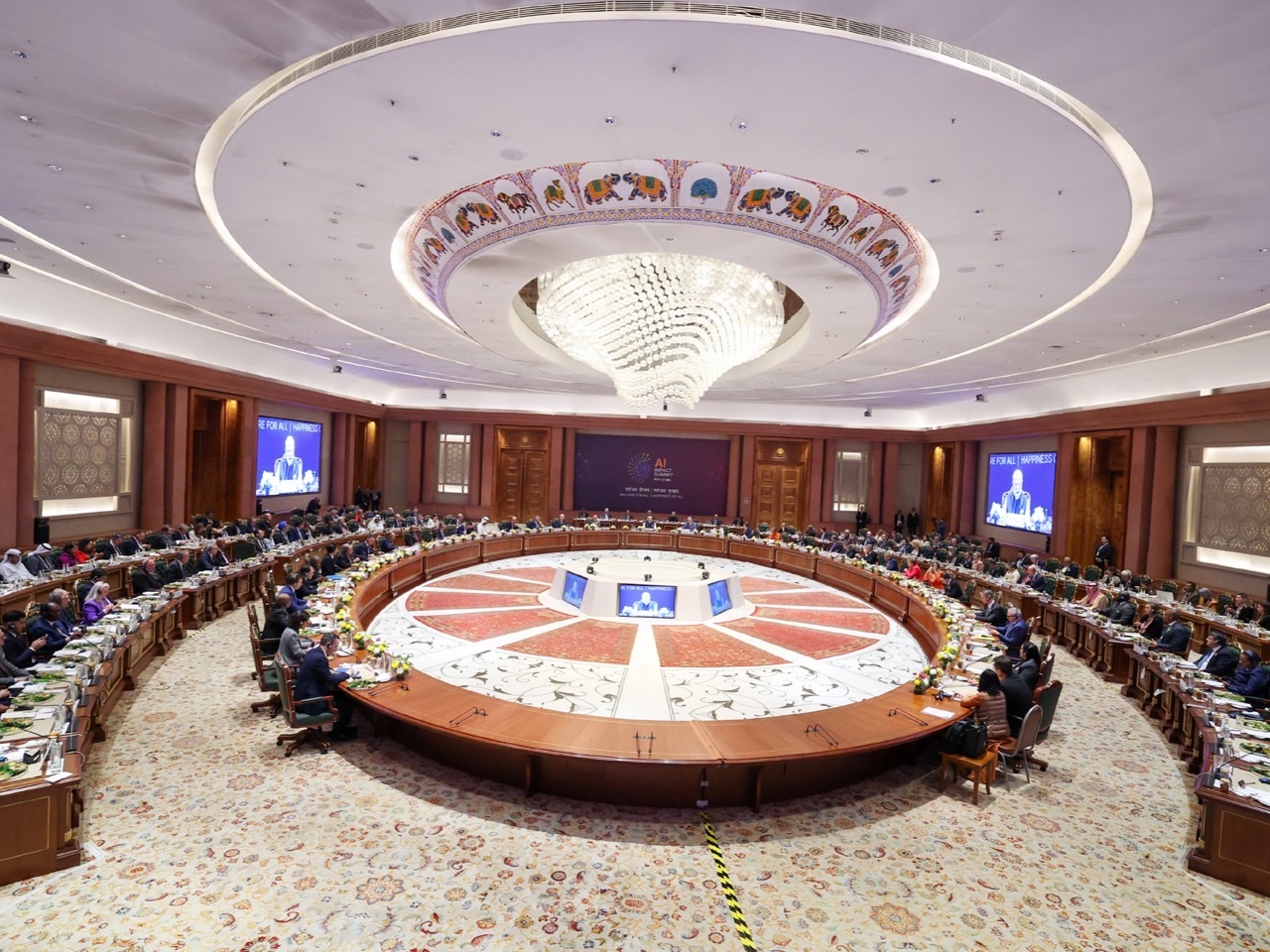
Cover photo: Leaders' Plenary at the India AI Impact Summit, Bharat Mandapam, New Delhi, 19 February 2026 by the Prime Minister's Office, GODL-India, via Wikimedia Commons.
Tags
Azhar Khan is the founder of Talentd, and a Sr. FullStack Engineer, currently working for USA Fintech company. Passionate about helping people find their dream jobs and grow their careers.