
Minimum Time to Type Word Using Special Typewriter - Video Solutions
5834. Minimum Time to Type Word Using Special Typewriter | Leetcode Biweekly Contest 59 | Solution
Minimum Time to Type Word Using Special Typewriter - Video Solution
Watch 10 video solutions for Minimum Time to Type Word Using Special Typewriter, a easy level problem involving String, Greedy. This walkthrough by Abhinav Awasthi has 926 views views. Want to try solving it yourself? Practice on FleetCode or read the detailed text solution.
Problem Statement
There is a special typewriter with lowercase English letters 'a' to 'z' arranged in a circle with a pointer. A character can only be typed if the pointer is pointing to that character. The pointer is initially pointing to the character 'a'.
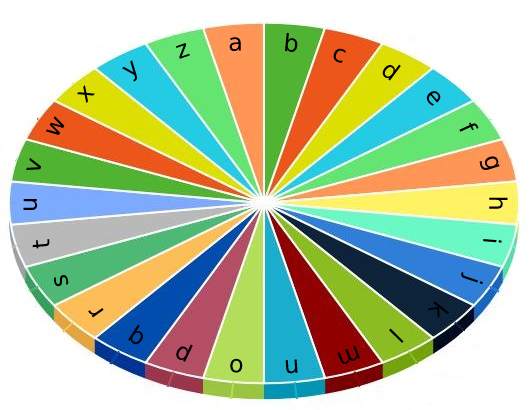
Each second, you may perform one of the following operations:
- Move the pointer one character counterclockwise or clockwise.
- Type the character the pointer is currently on.
Given a string word, return the minimum number of seconds to type out the characters in word.
Example 1:
Input: word = "abc"
Output: 5
Explanation:
The characters are printed as follows:
- Type the character 'a' in 1 second since the pointer is initially on 'a'.
- Move the pointer clockwise to 'b' in 1 second.
- Type the character 'b' in 1 second.
- Move the pointer clockwise to 'c' in 1 second.
- Type the character 'c' in 1 second.
Example 2:
Input: word = "bza"
Output: 7
Explanation:
The characters are printed as follows:
- Move the pointer clockwise to 'b' in 1 second.
- Type the character 'b' in 1 second.
- Move the pointer counterclockwise to 'z' in 2 seconds.
- Type the character 'z' in 1 second.
- Move the pointer clockwise to 'a' in 1 second.
- Type the character 'a' in 1 second.
Example 3:
Input: word = "zjpc"
Output: 34
Explanation:
The characters are printed as follows:
- Move the pointer counterclockwise to 'z' in 1 second.
- Type the character 'z' in 1 second.
- Move the pointer clockwise to 'j' in 10 seconds.
- Type the character 'j' in 1 second.
- Move the pointer clockwise to 'p' in 6 seconds.
- Type the character 'p' in 1 second.
- Move the pointer counterclockwise to 'c' in 13 seconds.
- Type the character 'c' in 1 second.
Constraints:
1 <= word.length <= 100wordconsists of lowercase English letters.
Approach Overview
Problem Overview: You start with a pointer on character 'a' of a circular typewriter containing the letters a to z. For each character in the target word, rotate the pointer either clockwise or counterclockwise to reach the letter, then press the key to type it. The goal is to compute the minimum total time required.
Approach 1: Simple Circular Distance Calculation (Greedy) (Time: O(n), Space: O(1))
The alphabet forms a circle of 26 characters. Moving from one letter to another has two possible paths: clockwise and counterclockwise. For each character in the word, compute the distance from the current pointer position using abs(curr - target). The opposite direction distance is 26 - diff. Choose the smaller value and add 1 second for pressing the key. Update the pointer to the typed character and continue scanning the string.
This works because each step is independent. The optimal move between two letters is always the shorter circular distance. No dynamic programming or backtracking is required. The algorithm simply iterates once through the word, making it linear time. This problem mainly tests understanding of circular distance calculations in string problems and applying a straightforward greedy decision at every step.
Approach 2: Prefix Sum Optimization (Time: O(n), Space: O(n))
If multiple distance queries were required, you could precompute cumulative rotation costs using a prefix structure. Convert each character into an index from 0–25 and precompute distances between adjacent characters in the word. A prefix sum array stores cumulative typing cost so that partial ranges can be evaluated quickly. Each transition still uses the same circular distance formula, but prefix sums make it easy to reuse computed movement costs.
For this specific problem the prefix sum approach does not improve asymptotic complexity. The word is processed once and each step is constant work, so the greedy scan is already optimal. Prefix sums mainly demonstrate how repeated movement computations could be aggregated when the problem expands to multiple queries or substring evaluations. It connects with common preprocessing patterns used in string traversal problems.
Recommended for interviews: The greedy circular distance solution is what interviewers expect. It shows you recognized the alphabet is a ring and minimized rotation using min(diff, 26 - diff). Mentioning the prefix-sum idea demonstrates awareness of preprocessing techniques, but the O(n) greedy scan is the clean and optimal implementation.
Complexity Analysis
| Approach | Time | Space | When to Use |
|---|---|---|---|
| Simple Circular Distance Calculation (Greedy) | O(n) | O(1) | Best for the standard problem. Single pass through the word with constant memory. |
| Prefix Sum Optimization | O(n) | O(n) | Useful when extending the problem to multiple queries or repeated substring cost calculations. |