
Kill Process - Solution & Explanation
Problem Statement
You have n processes forming a rooted tree structure. You are given two integer arrays pid and ppid, where pid[i] is the ID of the ith process and ppid[i] is the ID of the ith process's parent process.
Each process has only one parent process but may have multiple children processes. Only one process has ppid[i] = 0, which means this process has no parent process (the root of the tree).
When a process is killed, all of its children processes will also be killed.
Given an integer kill representing the ID of a process you want to kill, return a list of the IDs of the processes that will be killed. You may return the answer in any order.
Example 1:
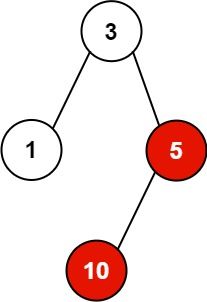
Input: pid = [1,3,10,5], ppid = [3,0,5,3], kill = 5
Output: [5,10]
Explanation: The processes colored in red are the processes that should be killed.
Example 2:
Input: pid = [1], ppid = [0], kill = 1
Output: [1]
Constraints:
n == pid.lengthn == ppid.length1 <= n <= 5 * 1041 <= pid[i] <= 5 * 1040 <= ppid[i] <= 5 * 104- Only one process has no parent.
- All the values of
pidare unique. killis guaranteed to be inpid.
Approach Overview
Problem Overview: You are given two arrays pid and ppid representing process IDs and their parent process IDs. When a process is killed, every descendant process in that subtree must also terminate. Given a process ID kill, return all processes that will be terminated.
Approach 1: Repeated Parent Scan (Brute Force) (Time: O(n^2), Space: O(n))
A straightforward method repeatedly scans the ppid array to find children of the process being killed. Start with the target kill process in a queue or list. For each process removed, iterate through the entire ppid array to find entries whose parent matches it, then add those child processes to the queue. Continue until no new processes are discovered.
This approach works because the parent-child relationships form a tree. However, each time you discover a node you scan the entire list again, which leads to O(n^2) time in the worst case. The space complexity remains O(n) to store the result and traversal queue. It demonstrates the basic relationship between parent and child processes but becomes inefficient for large inputs.
Approach 2: Build Process Tree + DFS (Time: O(n), Space: O(n))
A more efficient solution builds an adjacency list that maps each parent process to its children. Iterate once through pid and ppid, storing relationships in a HashMap<parent, List<children>>. This transforms the process hierarchy into a tree-like graph structure.
Once the adjacency list is ready, run a traversal starting from the process to kill. A recursive or iterative Depth-First Search walks through every descendant. Add the current node to the result list, then recursively visit each child found in the adjacency list. Because each process is visited at most once, the traversal runs in O(n) time.
This solution relies on constant-time lookups from a Hash Table and a graph traversal over the process tree. The total space complexity is O(n) for the adjacency list and recursion stack. The same structure can also be traversed using Breadth-First Search with a queue if you prefer iterative logic.
Recommended for interviews: The adjacency list + DFS approach is the expected solution. Interviewers want to see that you recognize the parent-child structure as a tree and convert it into a graph representation before traversal. Mentioning the brute-force scan shows baseline reasoning, but implementing the O(n) DFS or BFS traversal demonstrates stronger algorithmic thinking.
Solution
We first construct a graph g based on pid and ppid, where g[i] represents all child processes of process i. Then, starting from the process kill, we perform depth-first search to obtain all killed processes.
The time complexity is O(n), and the space complexity is O(n). Here, n is the number of processes.
Detailed Complexity Analysis
| Approach | Time | Space | When to Use |
|---|---|---|---|
| Repeated Parent Scan (Brute Force) | O(n^2) | O(n) | Small inputs or quick prototype without building extra structures |
| Adjacency List + DFS | O(n) | O(n) | General optimal solution for tree traversal problems |
| Adjacency List + BFS | O(n) | O(n) | Iterative alternative when avoiding recursion depth limits |
Video Solution
LeetCode 582. Kill Process • Happy Coding • 2,194 views views
Watch 9 more video solutions →Frequently Asked Questions
Is Kill Process easy or hard?
Kill Process Python/Java solution
How to solve Kill Process in O(n)?
What is the best approach for Kill Process?
Is Kill Process asked at Google/Amazon/Meta?
What data structure is used in Kill Process?
What is the time complexity of Kill Process?
Ready to solve this problem?
Practice Kill Process with our built-in code editor and test cases.
Practice on FleetCode