3535. Unit Conversion II
There are n types of units indexed from 0 to n - 1.
You are given a 2D integer array conversions of length n - 1, where conversions[i] = [sourceUniti, targetUniti, conversionFactori]. This indicates that a single unit of type sourceUniti is equivalent to conversionFactori units of type targetUniti.
You are also given a 2D integer array queries of length q, where queries[i] = [unitAi, unitBi].
Return an array answer of length q where answer[i] is the number of units of type unitBi equivalent to 1 unit of type unitAi, and can be represented as p/q where p and q are coprime. Return each answer[i] as pq-1 modulo 109 + 7, where q-1 represents the multiplicative inverse of q modulo 109 + 7.
Example 1:
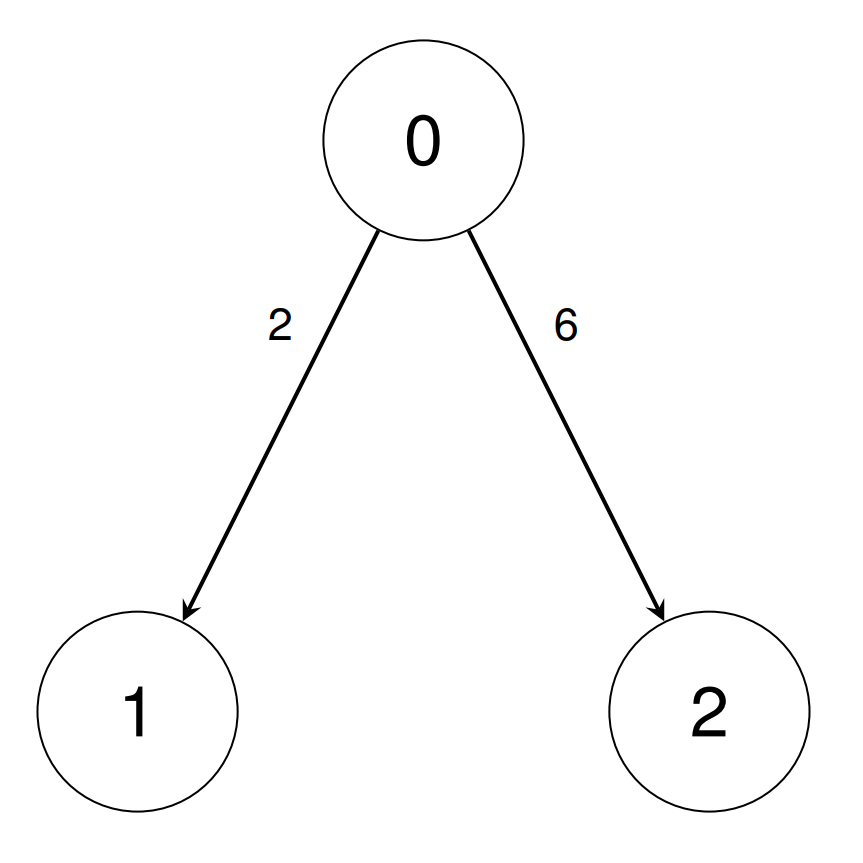
Input: conversions = [[0,1,2],[0,2,6]], queries = [[1,2],[1,0]]
Output: [3,500000004]
Explanation:
- In the first query, we can convert unit 1 into 3 units of type 2 using the inverse of
conversions[0], thenconversions[1]. - In the second query, we can convert unit 1 into 1/2 units of type 0 using the inverse of
conversions[0]. We return 500000004 since it is the multiplicative inverse of 2.
Example 2:
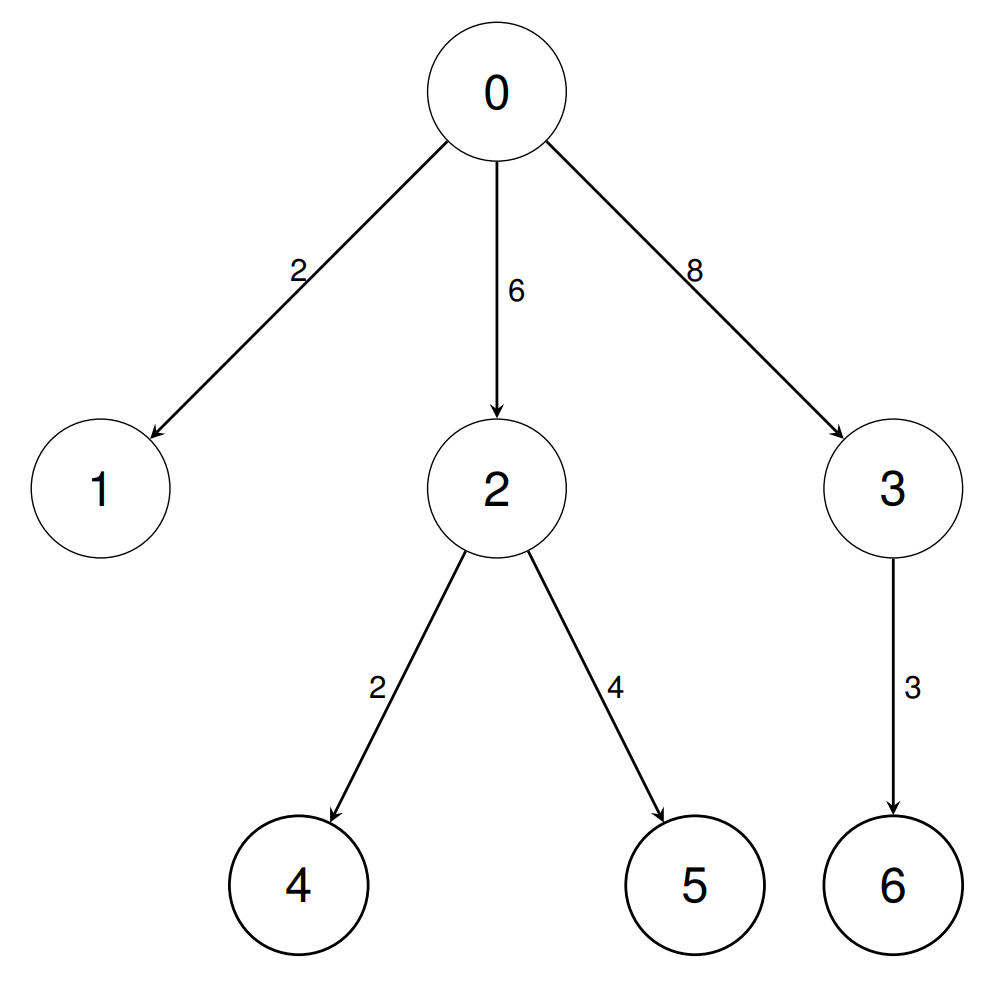
Input: conversions = [[0,1,2],[0,2,6],[0,3,8],[2,4,2],[2,5,4],[3,6,3]], queries = [[1,2],[0,4],[6,5],[4,6],[6,1]]
Output: [3,12,1,2,83333334]
Explanation:
- In the first query, we can convert unit 1 into 3 units of type 2 using the inverse of
conversions[0], thenconversions[1]. - In the second query, we can convert unit 0 into 12 units of type 4 using
conversions[1], thenconversions[3]. - In the third query, we can convert unit 6 into 1 unit of type 5 using the inverse of
conversions[5], the inverse ofconversions[2],conversions[1], thenconversions[4]. - In the fourth query, we can convert unit 4 into 2 units of type 6 using the inverse of
conversions[3], the inverse ofconversions[1],conversions[2], thenconversions[5]. - In the fifth query, we can convert unit 6 into 1/12 units of type 1 using the inverse of
conversions[5], the inverse ofconversions[2], thenconversions[0]. We return 83333334 since it is the multiplicative inverse of 12.
Constraints:
2 <= n <= 105conversions.length == n - 10 <= sourceUniti, targetUniti < n1 <= conversionFactori <= 1091 <= q <= 105queries.length == q0 <= unitAi, unitBi < n- It is guaranteed that unit 0 can be uniquely converted into any other unit through a combination of forward or backward conversions.
Asked at 1 company
Topics
Hints open one at a time
Hint 1
fromRoot such that fromRoot[a] is the number of units of type a equivalent to a single unit of type 0.Hint 2
answer[i] = fromRoot[unitAi]-1 * fromRoot[unitBi][[0,1,2],[0,2,6]] [[1,2],[1,0]]
[[0,1,2],[0,2,6],[0,3,8],[2,4,2],[2,5,4],[3,6,3]]
[[1,2],[0,4],[6,5],[4,6],[6,1]]