3997. Count Dominant Nodes in a Binary Tree
You are given the root of a complete binary tree.
A node x is called dominant if its value is equal to the maximum value among all nodes in the subtree rooted at x.
Return the number of dominant nodes in the tree.
Example 1:
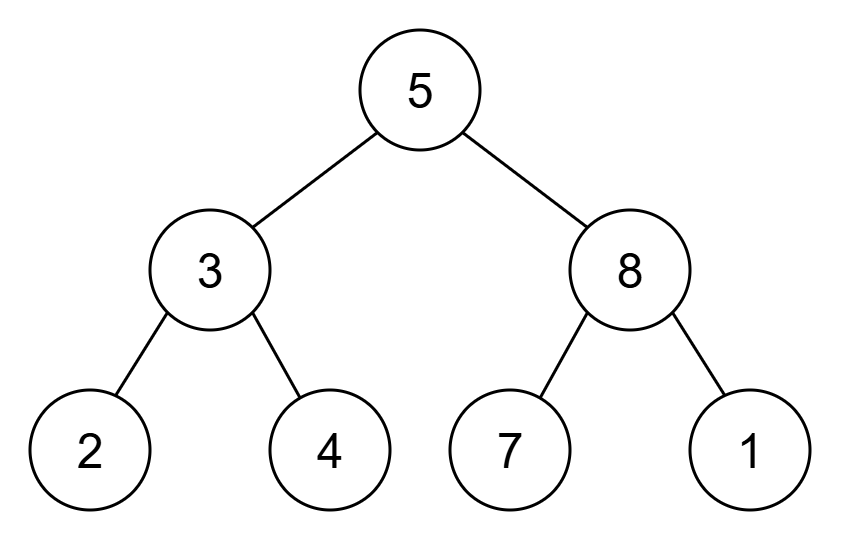
Input: root = [5,3,8,2,4,7,1]
Output: 5
Explanation:
- The leaf nodes with values 2, 4, 7, and 1 are dominant.
- The node with value 8 is dominant because its value is the maximum value in its subtree
[8, 7, 1]. - Thus, the answer is 5.
Example 2:
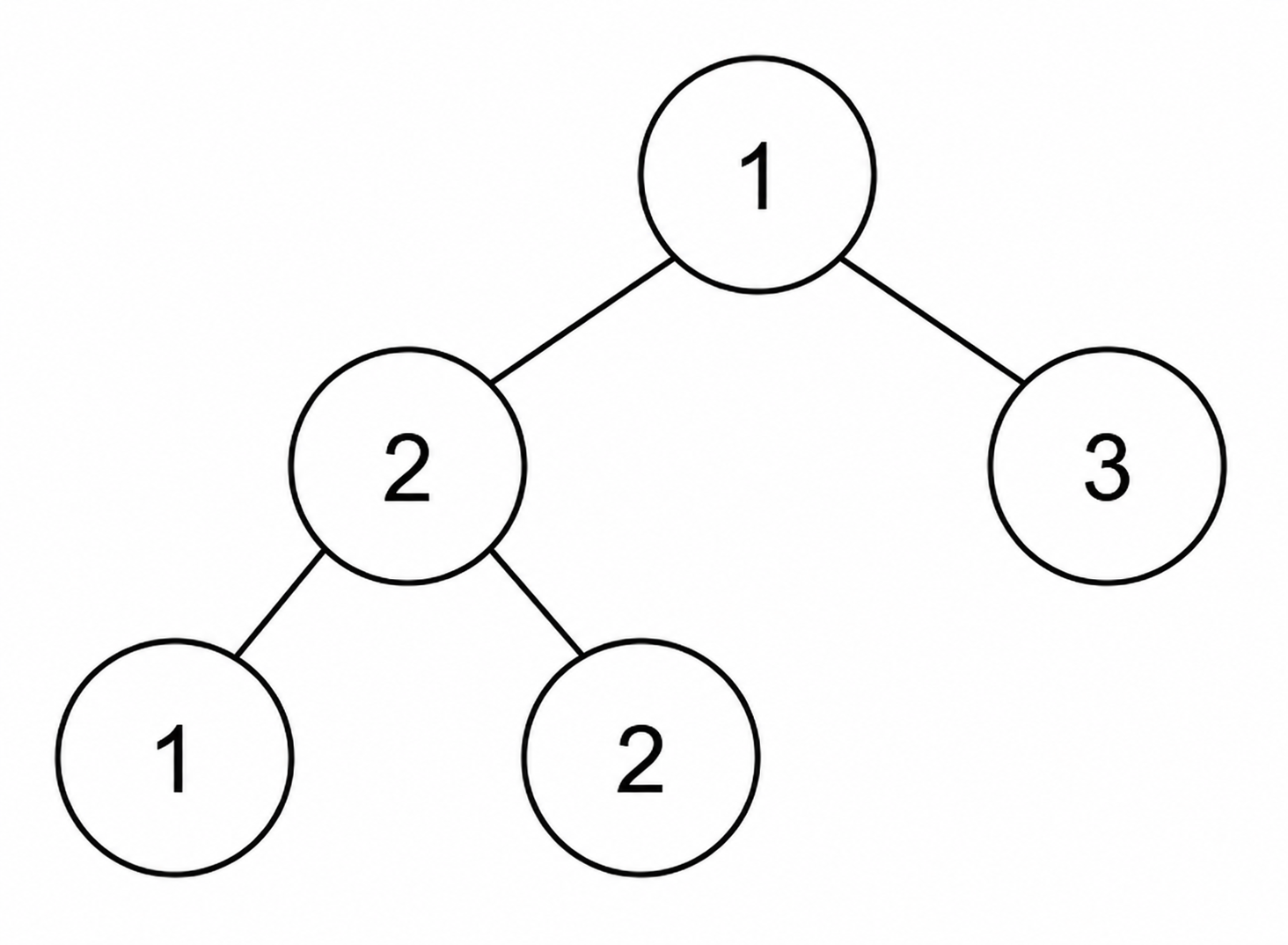
Input: root = [1,2,3,1,2]
Output: 4
Explanation:
- The leaf nodes with values 1, 2, and 3 are dominant.
- The node with value 2 whose subtree is
[2, 1, 2]is dominant because its value is the maximum value in its subtree. - Thus, the answer is 4.
Constraints:
- The number of nodes in the tree is in the range
[1, 105]. 1 <= Node.val <= 109- The tree is guaranteed to be a complete binary tree.
Topics
Hints open one at a time
Hint 1
Process the tree using postorder traversal, so both child subtrees are handled before their parent.
Hint 2
For each node, compute the maximum value in its subtree from its own value and the maximum values returned by its children.
Hint 3
A node is dominant if its value is equal to this subtree maximum.
Loading editor…
1# Definition for a binary tree node.
2# class TreeNode:
3# def __init__(self, val=0, left=None, right=None):
4# self.val = val
5# self.left = left
6# self.right = right
7class Solution:
8 def countDominantNodes(self, root: TreeNode | None) -> int:
9
Starter codePython 3Spaces: 4
Loading editor…
1# Definition for a binary tree node.
2# class TreeNode:
3# def __init__(self, val=0, left=None, right=None):
4# self.val = val
5# self.left = left
6# self.right = right
7class Solution:
8 def countDominantNodes(self, root: TreeNode | None) -> int:
9
Starter codePython 3Spaces: 4
Examples
Input
[5,3,8,2,4,7,1]
Input
[1,2,3,1,2]
Your code is saved on this device.Solution